Michael Laub / Remote Control Productions
A little bit all over the place (2026)
PHOTOGRAPHY / VIDEO / CREDITS / PRESS

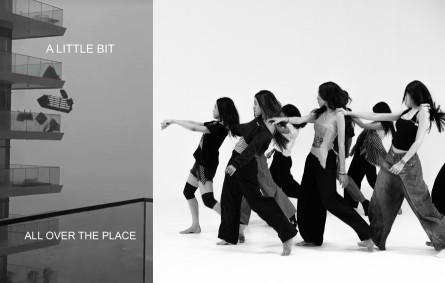
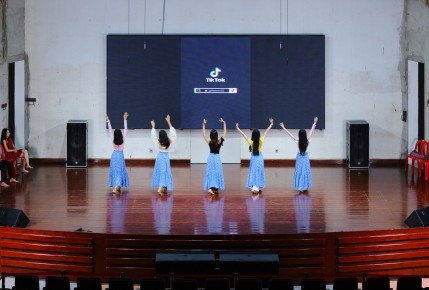
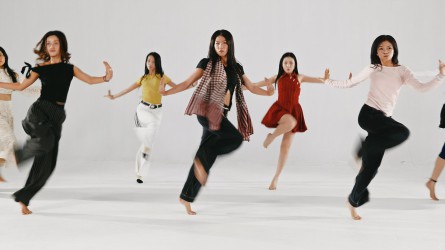
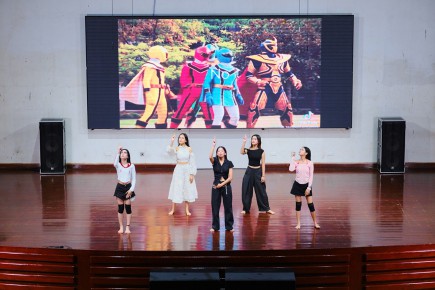
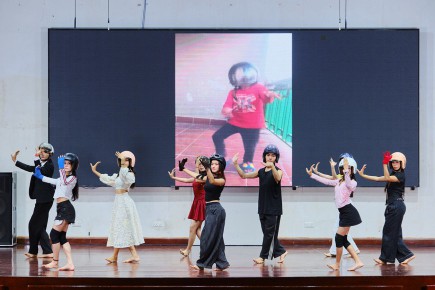
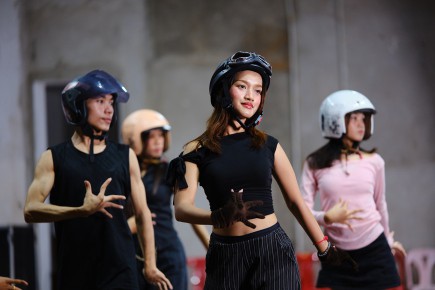
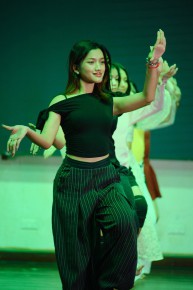
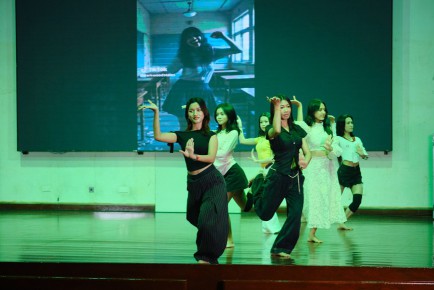
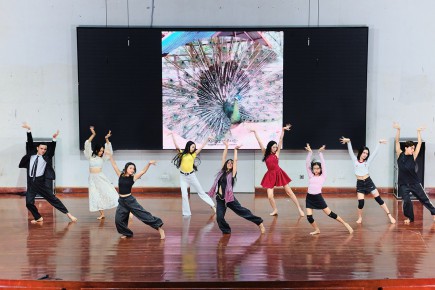
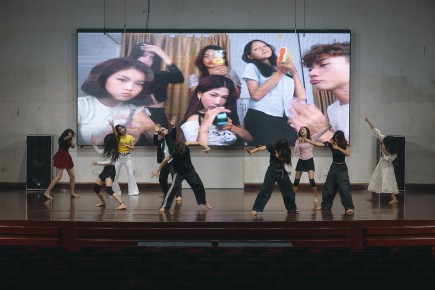
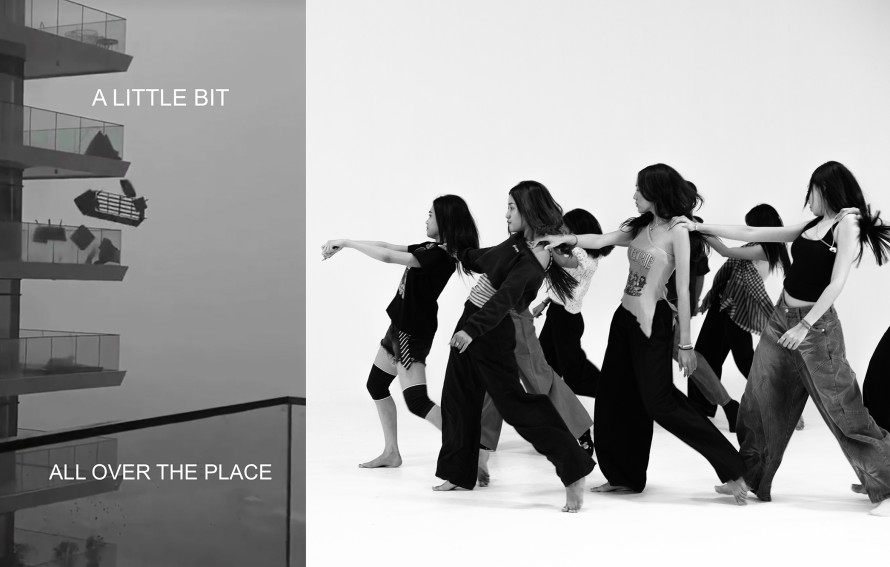
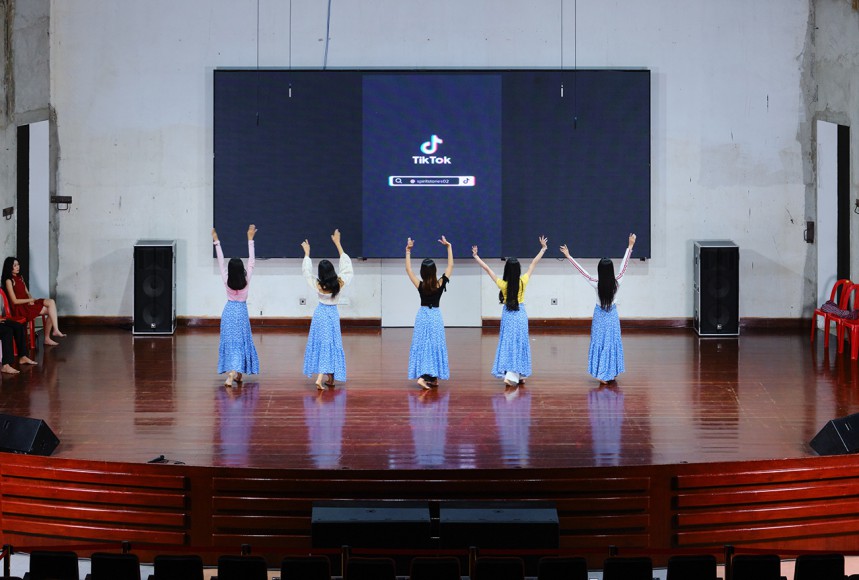
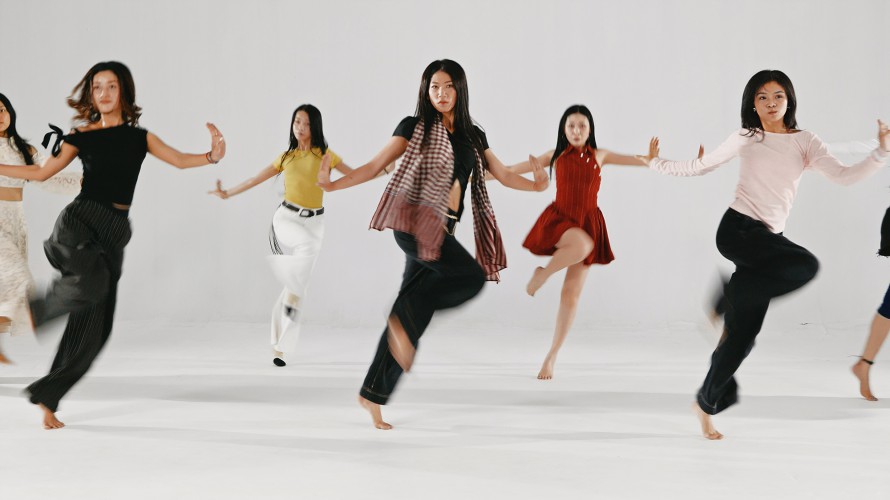
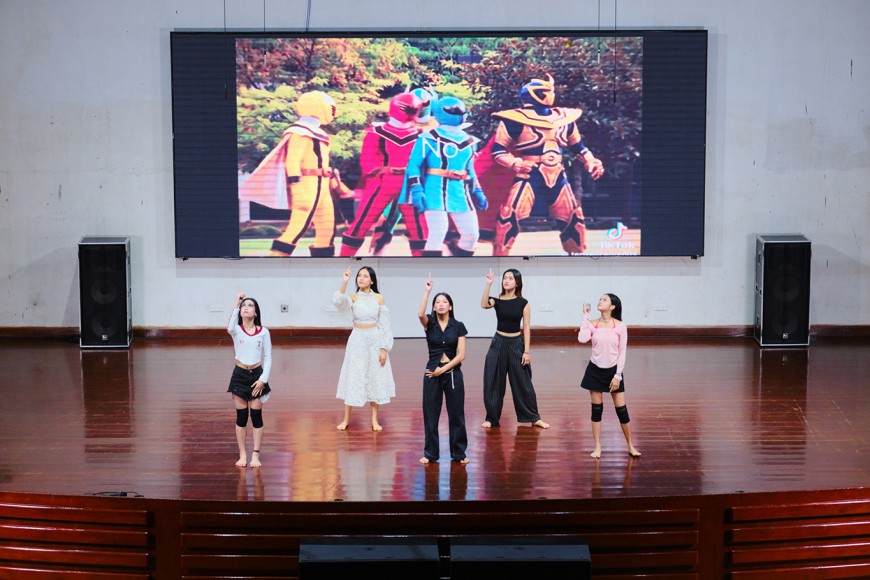
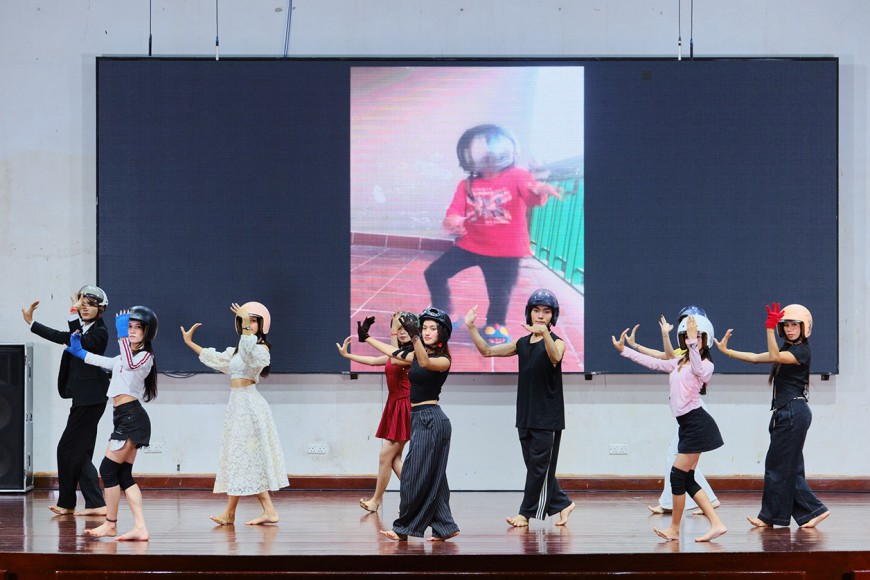
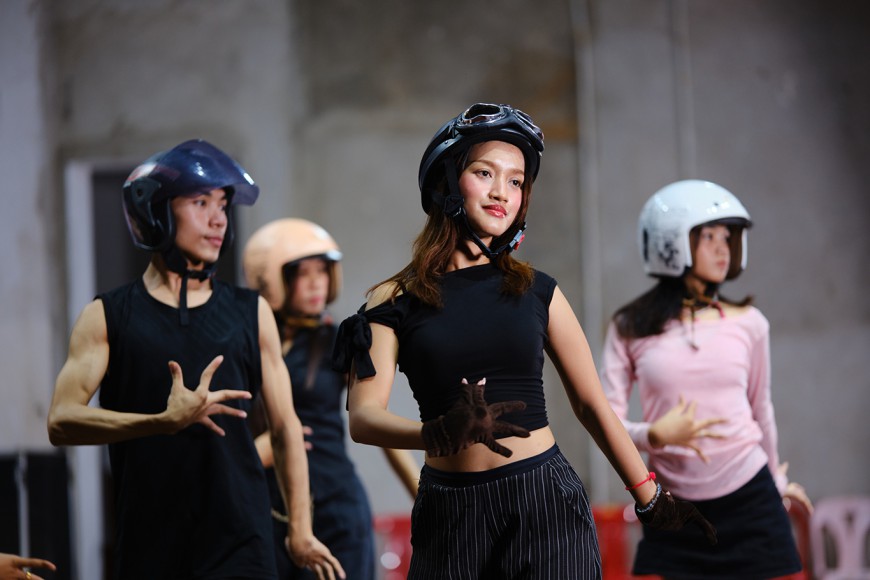
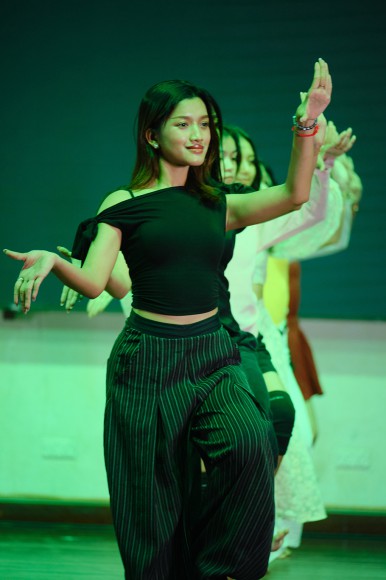
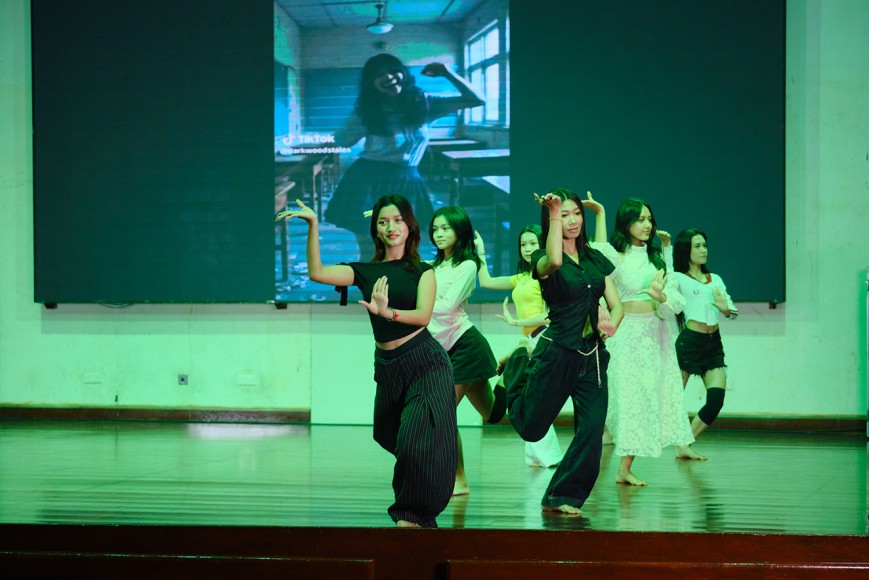
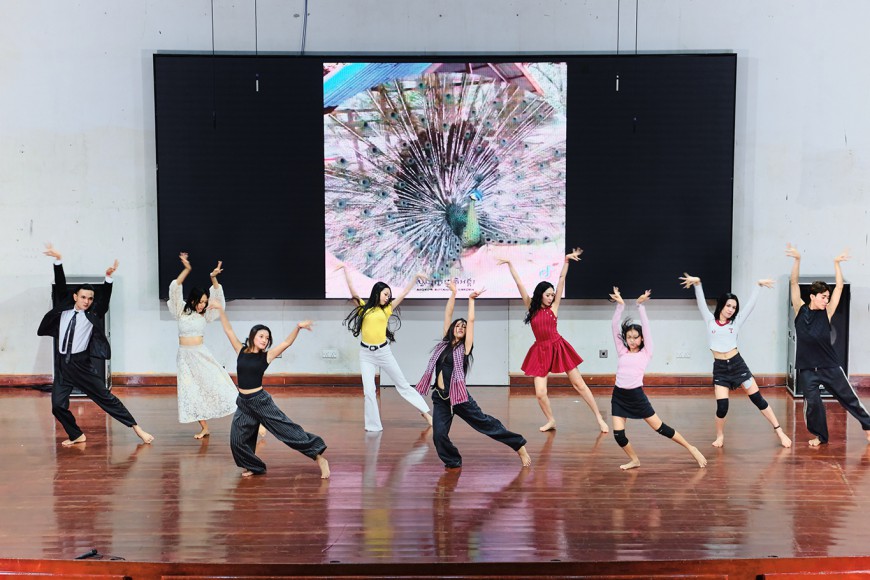
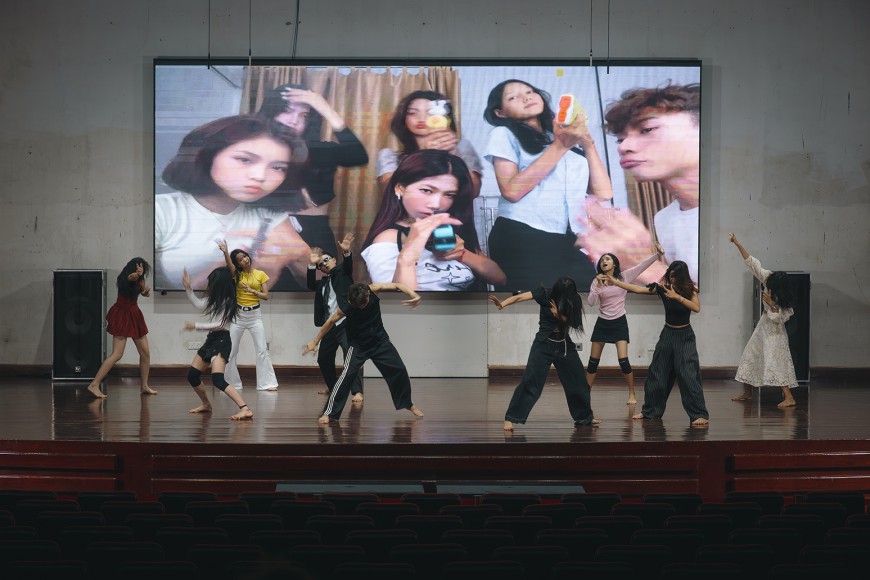
Michael Laub returns to the stage in Phnom Penh with nine dancers, co-choreographer Vanthy Khen and music by Mute Speaker. He approaches his new piece somewhat like a VJ, mixing traditional Khmer and contemporary dance with social media on a shifting soundscape.
"A little bit all over the place" is the last installment of a trilogy by Michael Laub, produced by the French Institute of Cambodia.
CREDITS
Produced by the French Institute of Cambodia, Phare Ponleu Selpak and Michael Laub / Remote Control Productions
Directed by Michael Laub
Choreography Michael Laub and Vanthy Khen
Music Mute Speaker
With Pisey Dos, Rossika Khen, Vanthy Khen, Keokanitha Phalla, Chhorda Phorn, Ratanak Phorn, Chantrea Tob, Sreythy Touch, Sothydacharline Vanthan and Sreynich Yoeun
Sound Elie Ommering
Projections / Assistant Director Reaksmey Yean
Light Valentin Lenain
Technical support Otdom Duk
Costumes The cast
Executive production management Coralie Morillon
Production Assistant Vorleak Prom
Technical support / video documentation Oyen Rodriguez
PRESS
Shaun Duff, The Phnom Penh Post, 22 May 2026
Michael Laub brings TikTok to the temple
Michael Laub is standing outside his rehearsal space in Phnom Penh on a Thursday afternoon, somewhere between a cigarette and a thought. You may remember him from our piece last November – the Belgian director and choreographer who has spent four decades making productions that critics call post-dramatic and he calls, essentially, fun. The biography may be familiar. The territory is new.
The show is called A LITTLE BIT ALL OVER THE PLACE, and it opens at Chenla Theater on June 5. It began, Laub tells me, not on a stage but in a dressing room. During rehearsals for his previous production, Madison Now, he kept noticing his dancers between sets, phones out, swiping, laughing, watching TikTok. The changing room as cultural crossroads. He decided to follow it.
Deep philosophical motivation
“The first trace of it came in Madison Now,” he says. “I gave them a break, and I walked into the dressing room, and I saw they were all in front of the mirror doing some TikTok dance with music that had nothing to do with Apsara or anything. And I thought, ‘wow!’ And then I asked them to do it on stage.”
From there, the idea metastasised. He started paying attention to TikTok, a platform he freely admits he had no patience for. He watched people watch it. He noticed the moment, at a dinner with an old friend, when the conversation simply stopped and a phone came out.
“It became intrusive in my own life,” he says. “So I thought, why not? What is actually on TikTok?” That, he deadpans, is the deep philosophical motivation of the piece.
What followed is a show built on a collision that shouldn’t work and somehow does: classical Apsara dance, the slow articulation of wrists and fingers that has ornamented Khmer tradition for centuries, set against the most transient medium alive. No backdrop, no scenery. Just dancers on a bare stage and, projected behind them, a screen. On that screen, TikTok. The bulk of it real footage, some of it made specifically for the show.
This is Laub doing what Laub does best. He can’t help himself.
He has always been drawn to a particular kind of cool, the Miles Davis kind, the kind that doesn’t announce itself. And there’s something of that here. The show pulls from Dave Brubeck, from shortwave radio static, from rock guitar and what I can only describe as good detective music, the kind that suggests rain-slicked streets without specifying which city – much of it crafted by Mute Speaker, a Kampot-based British musician. It sits in a time zone of its own, one foot in a decade Laub keeps circling back to, sometime in the sixties, and one foot in the present tense. Though he resists the nostalgia label.
“I’m not longing for the sixties or anything,” he says. “I can find many things I like better now. Some things are more functional, the technology, it’s not all TikTok. Tomorrow I could argue exactly the opposite. It’s all ambivalent. But I’m not nostalgic in the sense that I’m still working with this stuff. I don’t think that what you’re seeing there is nostalgia. I think it’s contemporary. I think it corresponds to their reality.”
What draws him back to that era is something more specific, something to do with the Warhol-Velvet Underground way of using film alongside music, the black and white of it, the cool of it.
“That really blew my mind,” he says. “Very often, that’s where the reference point is.” It shows up in the music, in the light, in a certain quality of attention the show asks of you.
The engine underneath
It shows up, too, in an unexpected place: the shadow side of TikTok. Laub began asking what the darker corners of the platform looked like, whether it carried any weight beyond cute cats and people eating. The answer, he found, was yes – and the instinct that led him there was not so different from the one that led Warhol to his Death and Disaster series. The thing that stops the show from being merely a novelty.
What he discovered, scrolling deeper, was the same thing Warhol noticed in the newspaper: that the banal and the devastating have a habit of sitting right next to each other. A dancing girL, a crying child. TikTok, it turns out, contains multitudes.
And undergirding all of it is something Laub describes with more feeling than almost anything else: the elegance of his dancers. He talks about Italian opera in the same breath, about a certain kind of beauty that the world seems to be slowly misplacing.
“I long for that kind of elegance which is disappearing,” he says. “Sometimes these girls come on, and just the grace and the elegance and all of that contrasts with the trash and the wannabe dancers and everything I talked about earlier. Either you get hypnotised by their fingers and by their hands and by their expressions – which are really exceptional – or you don’t.”
Laub says his dancers are no divas. Young, cooperative, possessed of stamina and a willingness to be pushed. They are, in his hands, precise instruments. He speaks about them with something close to wonder.
“They’re completely, totally into it. I can’t believe how I got to them without speaking a word of Cambodian,” he says. “It’s like telepathy they have with me. It’s unbelievable because they just look at me and they know what I want.”
Some of them are seventeen, some are masters in the classical traditon, some the best students in the room. He likes the cast. And working alongside co-choreographer Vanthy Khen. “It’s a really wild mix,” he says.
Without giving anything away
The repetition is still there. Anyone who has seen Laub’s work will recognise it, a phrase or a movement returned to until it stops being a phrase and starts being something else, something closer to a pulse. It is, as ever, the engine underneath everything. When it works, and here it works, it puts you somewhere between mesmerised and unmoored.
The show isn’t making an argument about TikTok. It isn’t cautionary, and it isn’t celebratory. What it seems to be is curious, a sustained act of looking at something with the same attention most of us never give it.
“I would have rather done something emptier,” he says, almost resigned. “This could be pretty loaded. But I hope that there is no clear message except that people need to interpret it themselves. It’s orchestrated randomness. And in the end it looks a lot more thought out than it was actually meant to be.”
He says this without apology. He seems, if anything, slightly pleased.
But the show has surprises. Without giving anything away, and I’ve been asked not to, there are moments that will make you catch your breath. I nearly came out of my seat at one point. Whether from shock or delight I’m still not sure. Perhaps both.
Then there are the dancers in their blue dresses, moving across the floor in a shuffle that is almost hypnotic, feet together at the toe, heels swaying outward, over and over, floating more than walking. There is a scene involving helmets. There is a fight. There is a child crying on a phone, and a girl dancing in a hospital. The show holds all of these things without explaining why they belong together, and somehow they do.
Is there a social message buried in all of this? Probably the wrong question to ask of Laub. He wants to have a good time. He wants the dancers and the audience to have a good time.
But the title is doing something. It arrives at a moment when everyone is a little bit all over the place, when the ancient and the algorithmic are colliding on a daily basis in ways nobody fully understands yet. Laub has been watching.
It shows.
A LITTLE BIT ALL OVER THE PLACE will be performed at Chenla Theater on June 5 and 6 at 7:30pm as part of the Golden (r)Age Performing Art Festival and is produced by the French Institue of Cambodia (IFC), Phare Ponleu Selpak and Michael Laub/Remote Control Productions, with support from OCIC Group.
Michael Laub brings TikTok to the temple - Phnom Penh Post